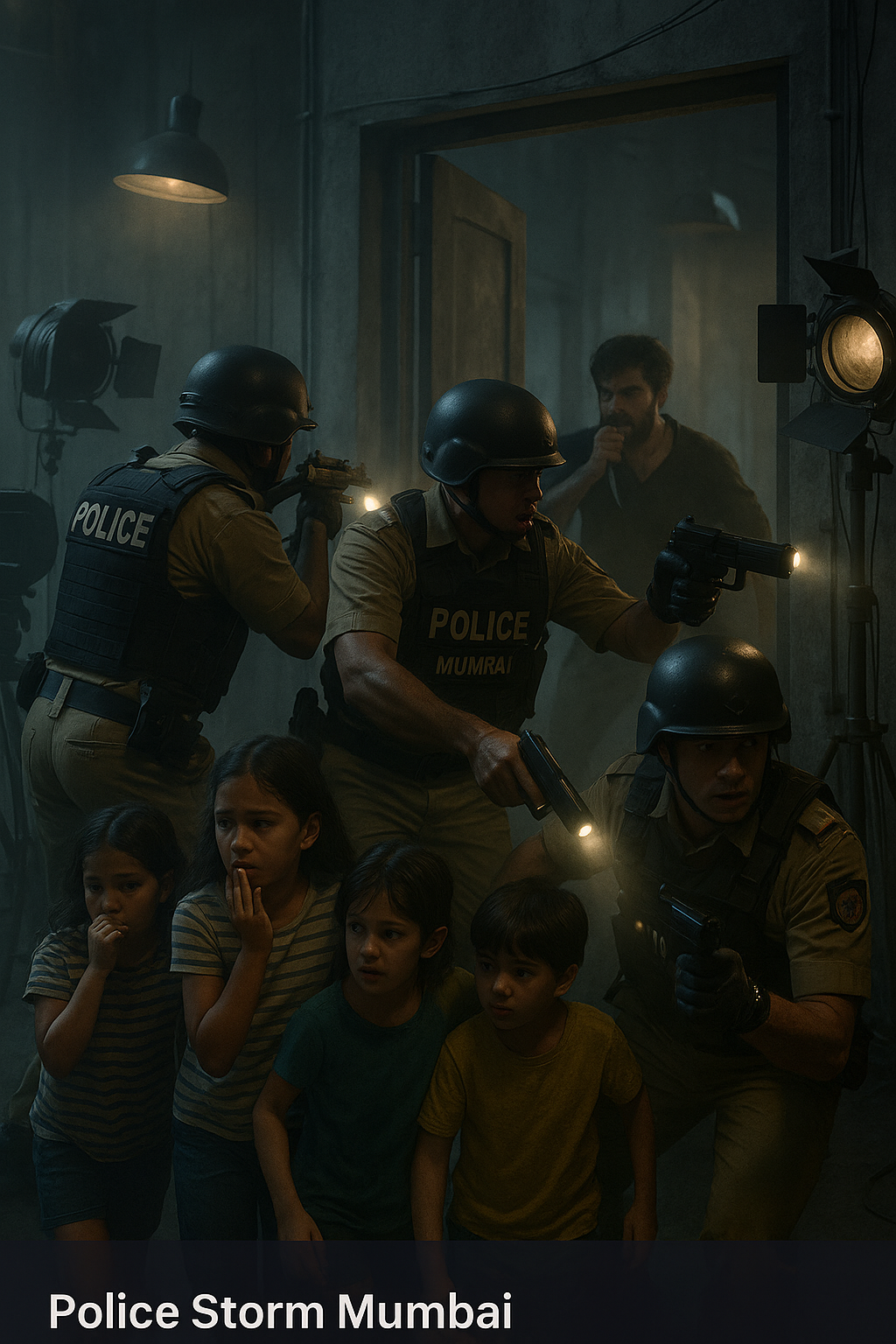
Mumbai police stormed the RA Studio in Powai on Thursday, rescuing 19 hostages, including 17 young actors and two adults, after a self‑proclaimed filmmaker threatened violence.
Lead Paragraph
The Mumbai studio hostage rescue unfolded when police burst into a locked ground‑floor studio, liberating 19 people who had been held hostage by a suspect who claimed to be a filmmaker. The operation, completed in under three hours, ended with the suspect arrested and the hostages safely reunited with their families.
Background / Context
India’s rapidly expanding film industry has, in recent years, become a magnet for international talent. With Mumbai’s studios offering a gateway to Bollywood, thousands of aspiring actors from across the globe travel to audition, often with little knowledge of the local safety protocols. This incident highlights an increasing concern: how secure are the shooting sets and audition venues that attract a mix of professionals, amateurs, and foreign students?
Earlier this year, the Ministry of Information and Broadcasting announced stricter regulations for production houses, demanding clear safety plans and insurance coverage. Yet, cases such as this show that unlicensed individuals can still infiltrate studio premises, posing risks that can affect both domestic and international aspirants.
Key Developments
The incident began around 1:45 p.m. when the Powai police control room received a distress call about a man threatening to harm several children within the MAH AVIR Classic building. Police teams, the fire brigade, and multiple ambulances converged on the premises within minutes.
Investigators identified the suspect as Rohit Arya, a self‑proclaimed filmmaker formerly associated with a web‑series project. He had locked 19 people in the studio: 17 children aged 13–17 years, a senior citizen, and another adult. In a video message, Arya demanded to speak with certain industry figures, threatening to ignite the premises and endanger the hostages if his demands were not met.
- Police forced entry at 2:30 p.m., breaking open a bathroom grill with an explosive charge.
- Within seconds of breaking the door, officers heard a gunshot‑like crack, followed by the shouts of police officers entering.
- Arrest records show Arya was found with an airgun and unidentified chemical substances.
- All hostages were transported out in a police‑arranged school bus by 5 p.m., and the children were handed back to their parents that evening.
Joint Commissioner of Police (Law and Order) Satyanarayan Chaudhary commented, “The motive appears to be tied to incomplete work‑related dues, and the suspect was evidently mentally unstable. We’ll continue our investigation with the assistance of the mental health wing.”
Impact Analysis
For international students seeking to break into the Indian film market, this incident sends a strong message:
- Security Risks Are Real – Even renowned studios can become vulnerable if safety protocols are compromised.
- Visa Applicants Must Vet Companies – A studio’s operational history and safety measures should be verified before accepting any invitation.
- On‑Site Supervision Is Crucial – Aspiring actors should accompany each other and maintain open communication with local authorities.
Moreover, the event underscores the importance of mental health support for individuals working in high‑pressure creative industries. Universities offering programs in film studies now consider integrating workshops that cover crisis response and safety awareness.
Expert Insights / Tips
Dr. Rija Sharma, Film Studies Professor, University of Mumbai: “This is a wake‑up call for all stakeholders. Audition venues must implement emergency protocols—clear exit routes, ID checks, and a dedicated security liaison. International students should always carry a copy of their visa, a contact number of a local mentor, and a list of trusted production houses.”
Industry professional Arun Mehta, head of Talent Acquisition at a leading casting agency, recommends:
- Verify the studio’s accreditation and insurance status.
- Use a professional escort during early morning or late‑evening shoots.
- Keep a small emergency kit—first aid supplies, a mobile charger, and a whistle.
- Report any suspicious activity immediately via a dedicated hotline.
International student Saanvi Patel, who was among the rescued hostages, shared her experience: “We were told it would be a normal audition, but we felt uneasy. I wish I’d known how to contact the police quickly. Thanks to the quick police response, we’re safe.”
Looking Ahead
After the rescue operation, Mumbai Police announced plans to install CCTV cameras in 12 film studios across the city. The Directorate of Film and Media (DFM) is drafting a new set of guidelines requiring production houses to submit safety audits quarterly.
Meanwhile, academic institutions are collaborating with industry bodies to develop a Studio Safety Certification program that will be mandatory for all studios handling international talent. The program will cover:
- Emergency response training for staff and actors.
- Protocols for dealing with mentally unstable individuals.
- Secure handling of hazardous materials and firearms.
For immigration agencies, this development highlights the need to include safety briefings in visa application processes for students pursuing film or performing arts programs.
Conclusion
Reach out to us for personalized consultation based on your specific requirements.